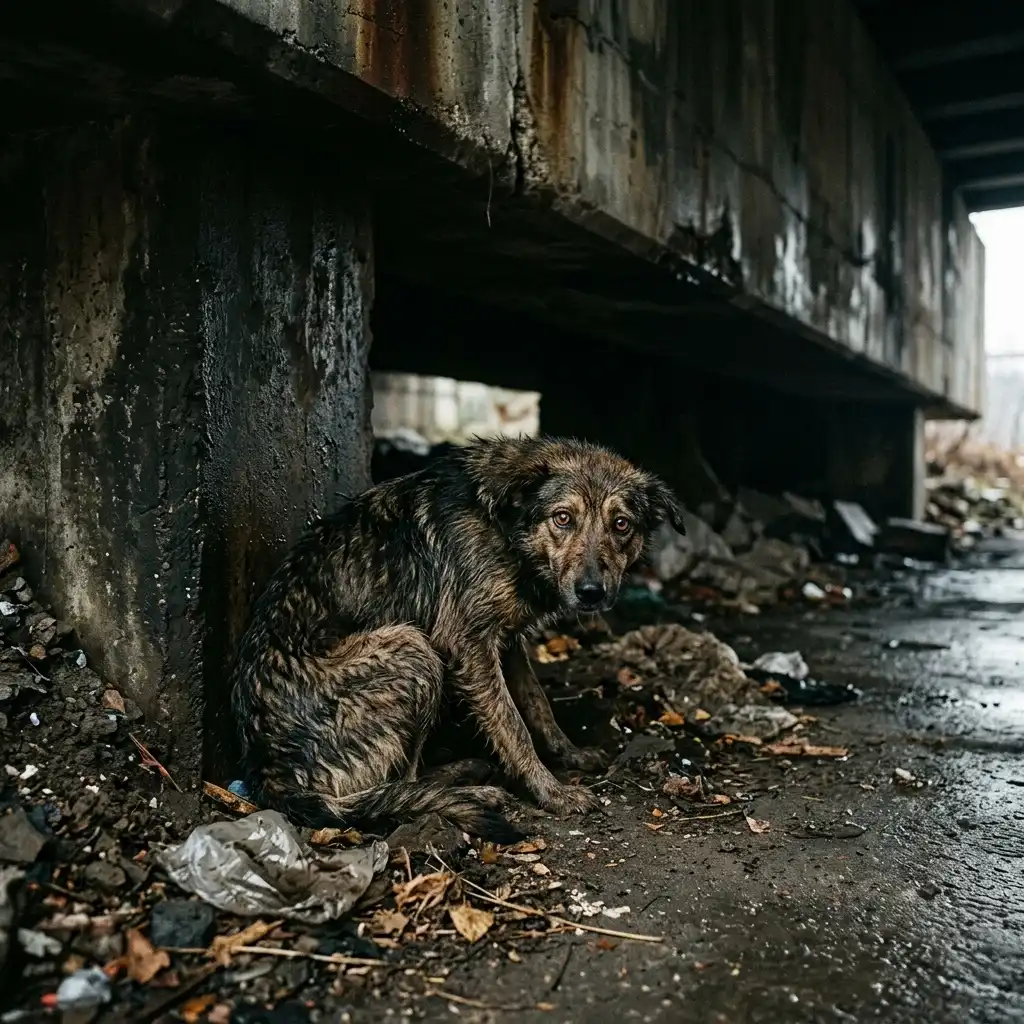
When your dog slips the leash or breaks through a fence, you project human emotion onto them. You imagine them trying to find their way back. You imagine them frantically searching for you.
They're doing neither of those things.
A lost dog undergoes a rapid, brutal biological transformation. If you don't understand what's happening inside their body and brain, you'll miscalculate every recovery decision.
Here's the timeline.
Hour 1: The Adrenaline Surge (Flight Mode)
The moment a dog escapes - whether spooked by a firework or chasing a rabbit - they enter pure flight mode. Cortisol spikes. Adrenaline floods their muscles.
What they do: They sprint blindly. They don't map their route. They don't look back at the house. They run strictly to put distance between themselves and whatever triggered them.
If you chase them during this phase, you extend it. A dog being pursued will run until their muscles physically cramp and force them to stop.
Hours 2-12: The Exhaustion Phase (Hiding)
Eventually, the adrenaline crashes. The dog hits profound physical exhaustion. Heart rate drops. The terror of the unfamiliar environment truly sets in.
What they do: They seek the darkest, tightest, lowest space available. Under porches. Inside storm culverts. Burrowed into thorny, inaccessible brush.
They won't make a sound. They won't bark. Even if you walk within five feet and call their name, they won't respond. Fear has completely overridden their recall training.
This is why so many dogs are found hiding within a quarter-mile of home - they never went far. They just went invisible.
Hours 24-48: The Feral Shift
This is the most critical and misunderstood phase.
If a dog is disconnected from their human pack for more than 48 hours, they cross a psychological threshold. They stop operating as a domesticated pet. They regress into prey-animal behavior.
What they do:
- They become intensely nocturnal, only moving between 1 AM and 5 AM
- They scavenge for food - dumpsters, feral cat colonies, small rodents
- They establish a tight geographic perimeter and patrol it at night
- They no longer recognize their owner visually
If you encounter your dog during this phase, they may not come to you. If you run toward them shouting their name, they'll perceive you as a predator and bolt.
Recovery at this stage requires food traps, patience, and calm - not chasing.
Days 3-7: The Scavenger Routine
If they survive the first 48 hours without being picked up by a shelter or struck by traffic, they build a survival routine. They memorize food sources. They establish hiding spots. They move only at night.
At this point, daytime searches are largely ineffective. You need trail cameras, food traps, and coordinated community outreach.
Why This Timeline Matters
Every hour you wait, the dog moves further through this biological progression. The window for a simple recovery - calling their name and having them come running - closes fast.
The first 1-2 hours are your best chance. The first 24 hours are critical. After 48 hours, you're dealing with a fundamentally different animal.
How Tracking Changes Everything
A dog wearing a tracking collar bypasses this entire timeline. There's no guessing where they went. No waiting for them to come out of hiding. No hoping they'll respond to their name.
You open your phone. You see the ping. You drive to the location. You retrieve them - often within minutes, before the feral shift ever begins.
Don't wait until day 3 to wish you had a tracker. Equip the hardware today and take the feral shift off the table permanently.
Editorial Notes
How this guide was prepared
This article was prepared to help owners take the next practical step quickly. We combine shelter and veterinary guidance, tracking documentation, and recovery planning so the advice stays useful in a real-world situation.
Written by
Find My Doggo Team
Reviewed by
Find My Doggo Safety Team
Editorial review team
Updated
2026-05-14