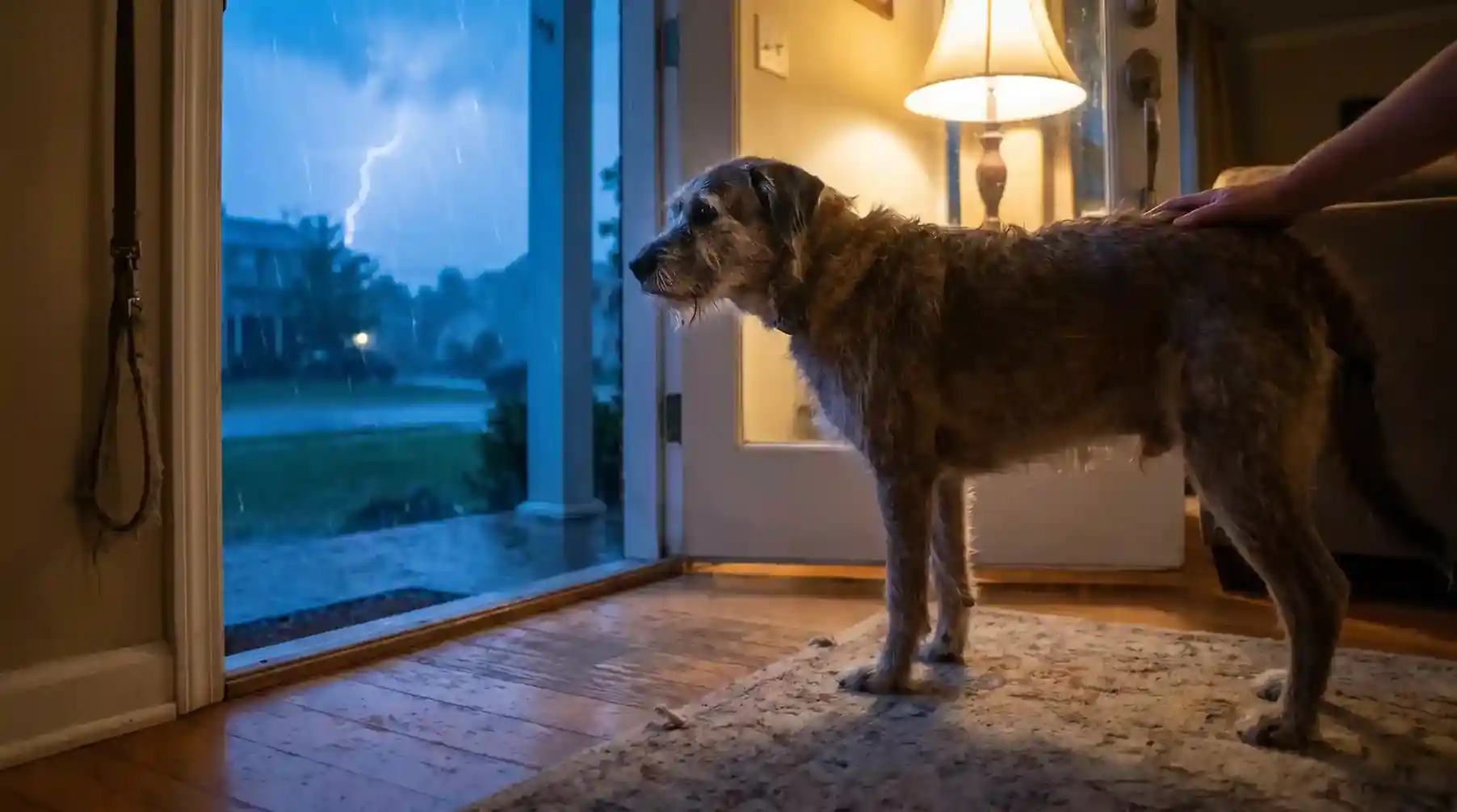
Thunderstorm anxiety in dogs is not just a noise problem. It can become an escape problem fast.
One clap of thunder, one flash of lightning, one open door, and a normally calm dog can switch into flight mode. That is why this topic belongs in escape prevention, not just behavior advice. You are not only trying to soothe your dog. You are trying to keep them inside, safe, and less likely to bolt.
If you searched for thunderstorm anxiety in dogs, dogs thunderstorm anxiety, or how to calm a dog during a thunderstorm, this guide gives you the practical version: what to look for, what to do, what not to do, and how to lower the odds of a runaway moment.
TL;DR
- Thunderstorm anxiety can show up as pacing, trembling, panting, hiding, clinginess, barking, and escape attempts.
- The safest plan starts before the storm: close windows, lock down doors and gates, and set up a calm room.
- Do not punish fear, force your dog outside, or leave the door open while you "check" the weather.
- If your dog bolts, the first hour matters. Secure the house, search nearby hiding spots, and start the lost-dog response right away.
- If the anxiety is severe or keeps getting worse, ask your veterinarian for a management plan before the next storm hits.
- Basic prevention comes first. An optional backup tracker can help later, but it is not treatment and it is not a guarantee.
Why thunderstorms trigger panic
Thunder is loud. Lightning is sudden. Pressure changes, wind, rain, and static can make the whole experience feel overwhelming to a dog that already worries about noise.
Some dogs freeze. Some pace. Some bolt. The behavior can look different from one dog to the next, but the root problem is the same: the dog does not feel safe.
That matters because fear changes decision-making. A dog that would normally stay in the yard may slam through a screen door, wedge through a gate, or slip a harness while trying to get away from the sound.
Signs your dog is stressed before the storm peaks
Thunderstorm anxiety often starts before the loudest part of the storm. Watch for the early signs.
- pacing or circling
- trembling or shaking
- heavy panting when the room is not hot
- drooling
- hiding under furniture or trying to wedge into corners
- clingy behavior, including following you from room to room
- barking, whining, or repeated whining at the door
- scratching at doors or windows
- trying to escape the room, yard, crate, or leash
- refusing food or treats
- wide eyes, ears pinned back, or a body that looks stiff and ready to spring
If your dog shows these signs every time the weather turns, do not wait for the next big storm to make a plan.
What to do before the storm starts
The best time to calm a storm-anxious dog is before the thunder hits.
Set up a safe room
Pick one room inside the house and make it predictable.
- close the windows
- draw curtains or blinds
- turn on white noise, a fan, or soft music
- give the dog a bed or mat they already trust
- keep water nearby
- keep the lights low but not dark if darkness makes the dog more anxious
- stay nearby if your presence helps them settle
The goal is not to force relaxation. The goal is to reduce triggers and reduce escape pressure.
Lock down the exits
If your dog is prone to panic, treat every door like a risk point.
- check gates before the storm arrives
- make sure screen doors and sliding doors latch fully
- keep the leash and harness ready by the main exit
- tell everyone in the house not to leave the dog unattended near an open door
- use current ID tags and make sure the microchip registration is up to date
A calm room does not help much if the dog can still slip out while someone is distracted.
Stay ahead of the trigger
If storms are predictable in your area, start your routine early.
A dog that is already nervous does better when the environment changes before the storm noise becomes unavoidable. That means the room, the lights, the doors, and the family routine should be in place before the first crack of thunder.
For a broader seasonal checklist, see our seasonal dog safety guide. It covers other common escape triggers too.
What not to do during a thunderstorm
People often make fear worse by trying to "fix" it in the moment.
Do not punish the fear
Scolding a panicked dog does not teach calm. It teaches that the storm plus your reaction is even scarier.
Do not force the dog outside
This is not the time to insist on a bathroom break just because the dog "needs to get used to it." If the storm is active and your dog is already panicking, safety comes first.
Do not chase or crowd a dog that is trying to flee
Chasing can turn a frightened dog into a running dog. Crowding can make them feel trapped. If your dog is showing bolt behavior, slow the situation down instead of adding pressure.
Do not leave the house setup to chance
Do not assume a gate is latched or a door is shut because it usually is. Thunderstorm nights are exactly when routines break.
If your dog bolts, the first hour matters
If the worst happens, switch from calming mode to recovery mode immediately.
- Secure the house and close every door.
- Check the yard, porch, side yards, under decks, and nearby hiding spots.
- Call the dog in a calm voice. Do not shout or run directly at them.
- Ask one person to search while another starts calls and posts.
- Contact your microchip company and mark the dog as lost.
- Call nearby shelters, emergency vets, and animal control.
- Post a clear local lost-dog alert with a recent photo and the exact location and time the dog escaped.
The first-hour plan is not about doing everything perfectly. It is about doing the right things quickly.
If you need the full search sequence, follow how to find a lost dog fast.
If you want to understand what usually happens next, our lost dog recovery rate guide explains the patterns owners tend to see in real searches.
When to call the vet
Some dogs get nervous during storms. Others have real phobia-level panic.
Call your veterinarian if you see:
- repeated panic during every storm
- destructive attempts to escape
- self-injury, broken teeth, or injuries from trying to flee
- a dog that cannot settle even after the storm passes
- worsening anxiety over time
- fear that is spilling into other sounds or situations
You do not need to guess your way through severe thunderstorm anxiety in dogs. Ask your vet about a behavior plan or other management options before the next storm season arrives.
That conversation matters. Severe fear is easier to manage before the dog learns that every thunderstorm means panic and escape.
Where Doggo Guard fits
Doggo Guard is not a treatment for thunderstorm anxiety.
It is an optional AirTag-ready backup layer for compatible iPhone households if your dog ever slips out during a panic moment. That is all.
It is not GPS. It does not replace a microchip, ID tags, training, a secure home setup, or vet-guided care. It is simply one more backup layer for the first chaotic minutes after a bolt.
That is the right order:
- prevention first
- vet support when anxiety is severe
- backup tracking last
Frequently Asked Questions
How do I calm my dog during a thunderstorm?
Start before the storm peaks. Close windows, lower outside noise, create a safe room, and stay calm yourself. If your dog is very worried, keep the routine simple and predictable. Do not force interaction.
What should I not do when my dog is scared of thunder?
Do not punish fear, force the dog outside, or chase a panicked dog around the yard or house. Those moves usually increase panic and make escape more likely.
When is thunderstorm anxiety severe?
It is severe when the dog cannot settle, tries to break out of the house or yard, injures themselves, or seems panicked every time a storm starts. That is a vet conversation, not a wait-and-see problem.
How can I reduce the chance my dog runs away during a storm?
Lock down doors and gates before the storm starts, keep the dog indoors early, use a calm room, and make sure tags and microchip details are current. If your dog is a known panicker, add a recovery plan before storm season.
Is a tracker enough by itself?
No. A tracker is a backup, not a substitute for prevention. The core safety steps still come first: secure exits, current ID, current microchip, and a plan for panic.
Related guides
If you want to keep building the full safety plan, these guides fit next:
The bottom line
Thunderstorm anxiety in dogs is scary because it can become an escape event in seconds.
The fix is not one big trick. It is a stack of small moves: lower the noise, reduce the panic, secure the exits, and have a recovery plan ready before the sky turns.
Dogs escape fast. Humans panic faster. The calm room should be ready before the first thunderclap.
Editorial Notes
How this guide was prepared
This article was prepared to help owners take the next practical step quickly. We combine shelter and veterinary guidance, tracking documentation, and recovery planning so the advice stays useful in a real-world situation.
Written by
Find My Doggo Team
Reviewed by
Find My Doggo Safety Team
Editorial review team
Updated
2026-06-15
Sources