TL;DR
- No, dog microchips do not have GPS.
- A microchip is passive RFID. It has no battery, no live signal, and no map.
- Microchips help after someone finds your dog and scans the chip at a shelter, vet, or clinic.
- If your dog is missing right now, you need an active layer like an AirTag collar or GPS tracker.
- The safest setup is layered: ID tags, microchip, and a tracking backup that matches your dog's risk.
Do microchips in dogs have GPS?
No. A dog microchip does not have GPS.
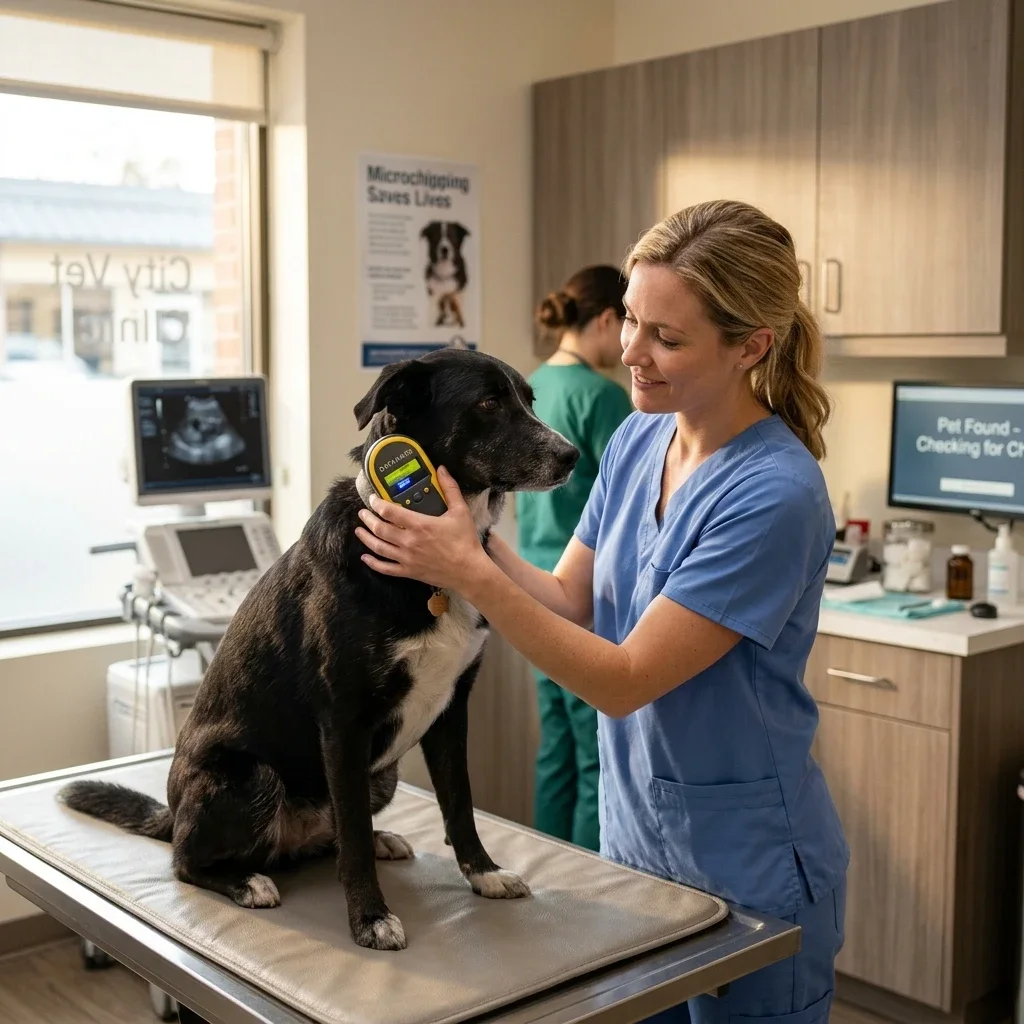
A microchip is a tiny RFID tag implanted under the skin. It stores a unique ID number. When a scanner passes over the chip, the scanner powers it briefly and reads that number. The chip does not broadcast location, send alerts, or update a phone.
That is why a microchip helps with identification, not live tracking.
Can microchips track dogs?
No. A microchip cannot track your dog.
It only works when someone physically scans the dog with the right reader. If your dog is hiding, running, or moving through an area where nobody has scanned them yet, the microchip cannot tell you where they are.
If you want to follow a dog during an active search, compare do AirTags work for dogs? or a dedicated GPS dog collar.
Is there an under-skin GPS for dogs?
Not in the way most people mean it.
When people search for an under-skin GPS for dogs, they are usually looking for a tiny chip that can show live location from inside the body. Standard pet microchips do not do that. They are passive RFID identification chips, not GPS trackers.
That difference matters:
- RFID microchip = permanent ID after a scan
- GPS tracker = active location during a search
If a page or product makes an implanted chip sound like live GPS, treat that claim carefully.
What a microchip actually does
A microchip is one of the best permanent ID tools for dogs.
It helps when:
- a finder takes your dog to a vet or shelter
- a shelter scans incoming animals
- your collar and tags are gone or unreadable
- you need proof of ownership later
The dog microchip guide covers registration and common mistakes in more detail.
Why microchips do not help during the first search
The first hours after an escape are when owners need location help most.
A microchip cannot help you search a field, a neighborhood, or a backyard by itself. It cannot show a route, send a ping, or tell you which direction your dog ran.
It only becomes useful when the dog is found and scanned.
That is why microchips should be treated as a backup layer, not the main recovery tool.
What actually helps during an active search
If your dog is missing right now, use a tool that can show location while the search is still happening.
GPS collars
GPS collars use satellite positioning plus cellular service to show your dog's location on a map. They are the strongest option for live tracking, especially for rural dogs, hunting dogs, or chronic escape artists.
Read more in the GPS dog collar guide.
AirTag collars
AirTag collars use Apple's Find My network. They are not GPS, but they can work well in suburban and urban areas where iPhones are common.
For iPhone households, an AirTag-ready backup collar can be a simple second layer. Doggo Guard fits that role. It is not GPS. It is a backup layer.
The layered safety stack
The best setup is not either/or. It is layered:
| Layer | What it does | Best use |
|---|---|---|
| ID tags | Lets a neighbor call you fast | Immediate contact |
| Microchip | Proves identity after a scan | Last-resort ID |
| AirTag or GPS tracker | Shows location during a search | Active recovery |
If you want the full comparison, start with the Dog Tracking Technology guide or the GPS vs AirTag collar comparison.
Why the wording matters for searchers
This topic attracts a lot of confused search traffic.
People are not just asking about microchips. They are also asking:
- do microchips in dogs have gps
- can microchips track dogs
- is there an under skin gps for dogs
- gps microchip for dogs price
- under skin gps tracker for dogs
Those searches all point to the same intent: people want to know whether a microchip can help find a lost dog in real time.
The answer is no. Microchips are for identification. Tracking requires a separate device.
Frequently Asked Questions
Do microchips in dogs have GPS?
No. Dog microchips do not have GPS. They are passive RFID identification chips with no battery and no live location signal.
Can microchips track dogs?
No. A microchip cannot track a dog's location. It only works when a scanner reads the chip and looks up the ID number in a registry.
Is there an under-skin GPS for dogs?
Standard pet microchips are not under-skin GPS devices. They are implanted ID chips. If you need live tracking, use an external GPS tracker or an AirTag collar.
Why do people think microchips have GPS?
Because the word "chip" sounds like tracking technology. In reality, the chip only becomes useful after someone finds the dog and scans it.
What should I use if my dog is missing right now?
Use active search tools first: call nearby shelters, post local alerts, search quietly, and use a live tracker if your dog has one. Microchips help later, after someone scans your dog.
Should every dog still have a microchip?
Yes. Even though microchips do not track, they are still one of the best permanent identification tools for reunions after the search.
The bottom line
No, microchips in dogs do not have GPS.
A microchip is still worth having, because it gives your dog a permanent identity if they are found and scanned. But if you want to know where your dog is during an escape, you need a separate tracking layer.
That is why the most reliable setup is simple: collar tags, a registered microchip, and an active tracker that fits your dog's real life.
Doggo Guard is an AirTag-ready backup collar for iPhone households. It is not GPS and does not replace a microchip, ID tags, training, supervision, or a secure yard.
Editorial Notes
How this guide was prepared
This article was prepared to help owners take the next practical step quickly. We combine shelter and veterinary guidance, tracking documentation, and recovery planning so the advice stays useful in a real-world situation.
Written by
Find My Doggo Team
Reviewed by
Find My Doggo Safety Team
Editorial review team
Updated
2026-06-01