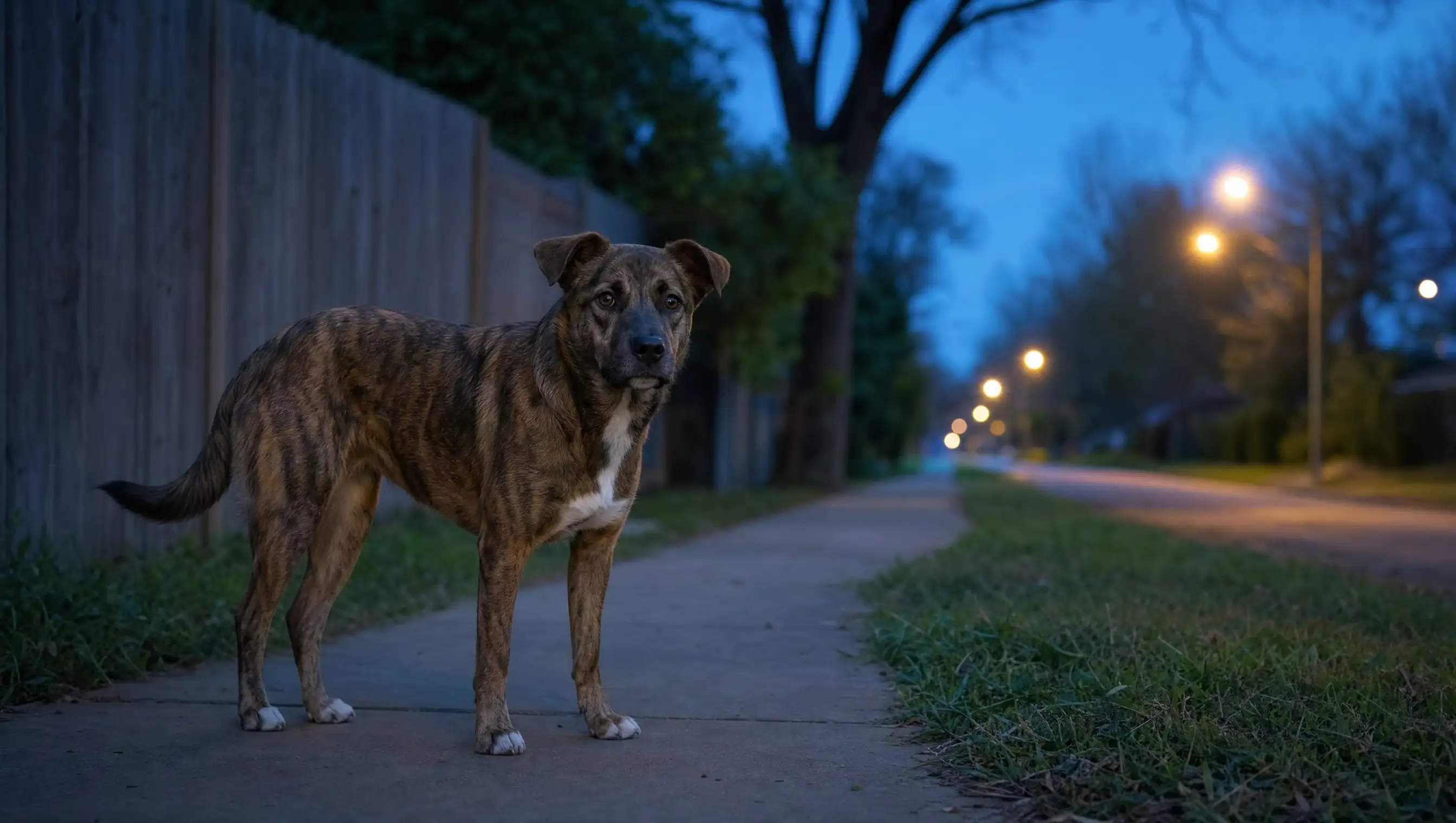
TL;DR
- A lost dog can stay within a few houses or travel several miles, depending on fear, confidence, terrain, and time.
- Start close if your dog is shy, older, newly adopted, injured, or noise-sensitive.
- Expand faster if your dog is confident, athletic, social, or escaped near roads, trails, or open space.
- Search in rings: immediate hiding spots first, then routes, then sightings.
- A microchip helps after someone finds your dog. A secure tracker or AirTag collar can help during the search.
How far can a lost dog travel in the first few hours?
A lost dog can travel anywhere from a few hundred feet to several miles in the first few hours. There is no single safe number because dogs do not all behave the same way after an escape.
A frightened dog often hides close to the escape point. A confident dog may trot down a sidewalk, follow a scent trail, or keep moving until something stops them. That difference matters more than breed size alone.
Use distance as a search tool, not a prediction. Your first job is to decide whether your dog is more likely hiding, roaming, or following a familiar route.
What decides how far a lost dog goes?
A lost dog's travel distance usually comes down to five factors.
| Factor | Shorter travel pattern | Longer travel pattern |
|---|---|---|
| Temperament | Shy, noise-sensitive, newly adopted | Social, bold, athletic |
| Escape trigger | Sudden fear, storm, fireworks | Curiosity, scent, open gate |
| Environment | Dense yards, porches, fences | Open roads, trails, fields |
| Time missing | Minutes to first hour | Multiple hours or overnight |
| Human pressure | Quiet search, familiar scent | Chasing, yelling, crowding |
A scared dog is not thinking like a pet. They are looking for cover. That is why a dog can be close enough to hear you and still refuse to come out.
What search radius should you start with?
Start with the smallest radius that matches your dog's likely behavior, then widen in a planned way. If you need the broader first-day plan, pair this map with our first 24 hours lost dog checklist.
| Dog profile | First search radius | What to check first |
|---|---|---|
| Shy or newly adopted dog | 0 to 0.25 miles | Under decks, sheds, shrubs, parked cars |
| Small senior dog | 0 to 0.5 miles | Neighbor yards, garages, quiet corners |
| Average family dog | 0.5 to 1 mile | Sidewalks, fence lines, parks, familiar walking routes |
| Confident athletic dog | 1 to 3 miles | Roads, trails, school fields, creek beds |
| Scent driven hound or working breed | 2 to 5+ miles | Wooded edges, farms, trail systems, food sources |
Do not treat the table as a guarantee. Treat it as a starting map. If a verified sighting comes in farther away, follow the sighting.
Why do scared dogs often stay close?
Scared dogs look for the first place that makes them feel invisible. That may be the neighbor's porch, a shed, a hedge, a culvert, or the dark space beside a garage.
This is why the first search pass should feel almost boring. Check the spaces you could miss while rushing. Look under things. Ask neighbors to open gates, sheds, and garages. Search at dog height.
The ASPCA's lost pet guidance also emphasizes contacting shelters and using neighborhood outreach quickly. That outreach matters because a hiding dog may be on private property you cannot see from the street.
Why do some dogs travel miles?
A confident dog can cover ground quickly because they are not hiding. They may follow roads, creek beds, walking trails, fence lines, or familiar smells. Our guide to where lost dogs usually go can help you choose which routes to check first.
Dogs that love people may approach strangers. Dogs with strong prey drive may follow wildlife. Dogs that escaped during a normal backyard moment may simply keep exploring until they get tired, confused, or blocked.
If your dog is bold and moving, pair ground searching with fast reporting. Post in local lost pet groups, call nearby shelters, and ask people not to chase. Ask for time-stamped sightings instead.
How should your search expand over time?
Use time missing to guide your search rings.
Hours 0 to 1: search the escape point hard
Walk the immediate area slowly. Check under decks, porches, sheds, shrubs, cars, and along fence lines. Leave someone at home if possible because dogs sometimes circle back.
Hours 1 to 3: widen to nearby routes
Move out to the streets, paths, and landmarks your dog already knows. Ask neighbors to check yards and cameras. Call your dog's name only in a calm voice. Panic shouting can push a scared dog farther away.
Hours 3 to 12: switch from guessing to sightings
Post clear photos, call shelters, notify vet clinics, and build a sightings map. Mark the escape point, each confirmed sighting, and the time. Patterns often appear when you stop thinking in straight lines.
After 12 hours: refresh the map, not just the route
By now, your dog may be moving at quieter times. Search dawn, dusk, and overnight edges if safe. Keep flyers and online posts active. Recheck the first hiding spots because some dogs return when the neighborhood gets quiet.
How can a tracker change the search radius?
A tracker does not make escape prevention unnecessary, but it can reduce blind searching.
A GPS tracker may help in rural or low-phone-density areas. An AirTag-ready collar can be a simple backup layer for iPhone households in neighborhoods where nearby Apple devices may report a last known location. It is not GPS and it does not guarantee recovery, but one location update can turn a huge search radius into a real place to start.
If you want that backup layer without another subscription, the Doggo Guard AirTag Collar is built to keep an AirTag secured on the collar instead of dangling loose from a keyring.
What mistakes make a lost dog travel farther?
Avoid these common search mistakes:
- Chasing a scared dog after a sighting
- Sending too many people directly toward the dog
- Yelling the dog's name in panic
- Leaving the gate or front door closed if the dog may return
- Waiting too long to call shelters and vet clinics
- Assuming a microchip means the dog can be tracked
A microchip is still important. The AVMA explains that microchips provide permanent identification, but the chip only helps when someone scans your dog. During the active search, you still need sightings, outreach, and location clues.
Frequently Asked Questions
Can a lost dog travel 10 miles?
Yes, some dogs can travel 10 miles or more, especially over multiple days or in rural areas. Most searches should still start close because many scared dogs hide near the escape point before they move farther.
Do dogs usually run in a straight line?
No. Lost dogs often follow edges, scent trails, roads, creeks, fences, and familiar routes. Build your search map around likely paths and verified sightings, not a perfect circle.
Should I drive around calling my dog's name?
Drive only when you are expanding the search or checking sightings. If your dog is scared, loud calling from a moving car may not help. Use calm voice, scent items, flyers, and neighborhood alerts.
Will my dog come back home on their own?
Some dogs do circle back, especially after the area gets quiet. Keep someone near home if possible, leave safe scent items near the entry point, and keep searching. Do not assume they will return without help.
What is the best first move if my dog just escaped?
Secure the escape point, search the nearest hiding spots, alert neighbors, and ask people not to chase. Then widen the search in rings while you call shelters and post a clear lost dog alert.
The safer plan starts before the gate opens
The worst time to build a search plan is after your dog is already missing. Check your yard, update your microchip registration, keep current photos, and decide how you would track your dog if they slipped out today.
Backup plans feel unnecessary until the open gate moment. Then they become the whole plan.
Editorial Notes
How this guide was prepared
This article was prepared to help owners take the next practical step quickly. We combine shelter and veterinary guidance, tracking documentation, and recovery planning so the advice stays useful in a real-world situation.
Written by
Find My Doggo Team
Reviewed by
Find My Doggo Safety Team
Editorial review team
Updated
2026-05-21