Your dog gets loose. You jump in the truck. A neighbor asks if you can track them.
"It's fine," you say. "They're microchipped."
That confidence is the most dangerous mistake in dog recovery.
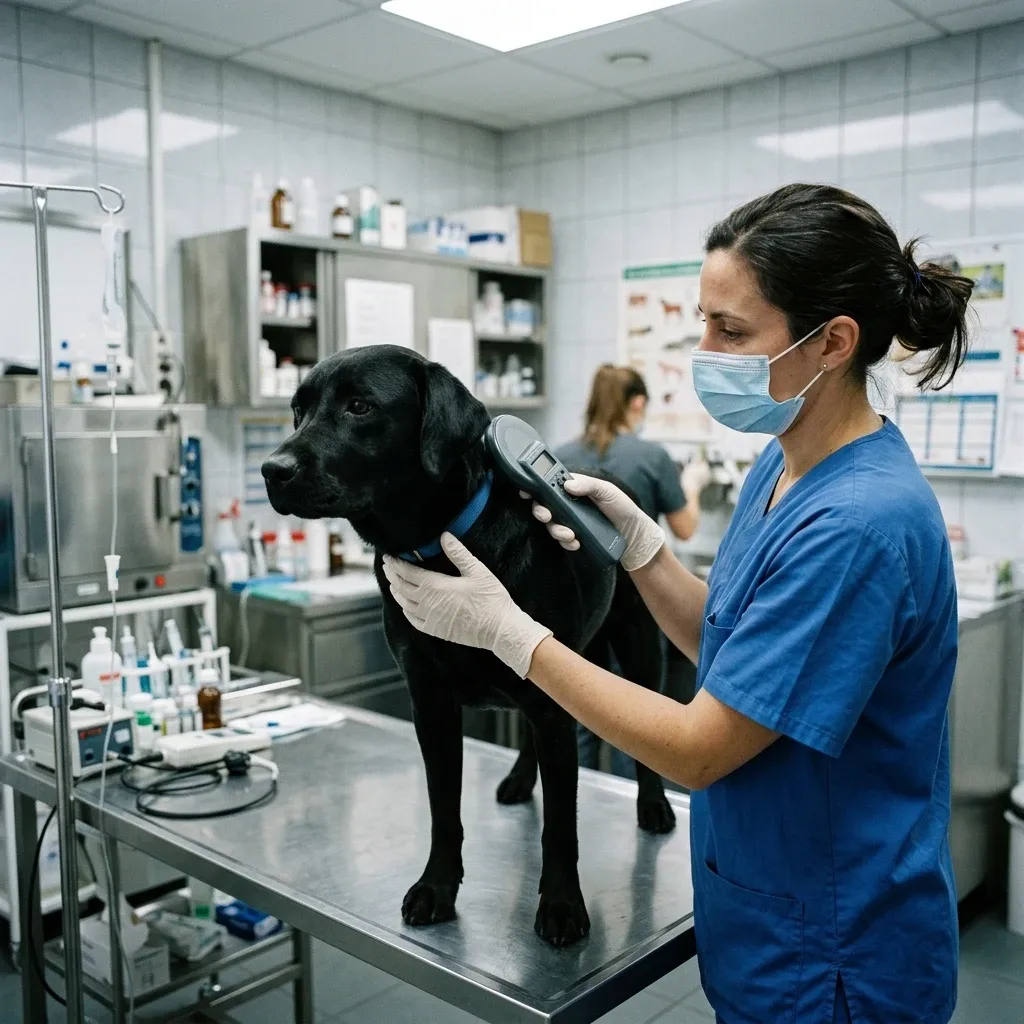
A microchip is not a GPS tracker. It's a dormant glass barcode the size of a grain of rice. It has no battery, no cellular modem, and no way to broadcast its location. It only speaks when a physical wand is pressed against your dog's neck - and only if someone finds them first.
Here's how to make sure your dog's microchip actually works when it matters.
What a Microchip Actually Does
A microchip is passive RFID technology. When a vet or shelter scanner sends radio waves at the chip, it powers up just long enough to spit out a 9-15 digit serial number. That number links to a private registry database that contains your contact information.
That's it. No GPS. No live tracking. No beacon.
The AAHA Universal Pet Microchip Lookup Tool is the closest thing to a centralized system - you enter the chip number and it tells you which registry holds the data. But it doesn't show location. It just tells you who to call.
The 6-Step Chain That Has to Work Perfectly
For a microchip to reunite you with your dog, every single link in this chain must hold:
- A stranger must physically catch your panicked dog
- That person must be willing to put the dog in their car
- They must drive to an open shelter or vet clinic
- The clinic must actually scan the dog's neck
- The chip number must match a current registry entry
- Your phone number in that registry must be up to date
If your dog is hiding under a porch three miles away, the microchip does absolutely nothing. The AVMA confirms that microchipping is the most effective permanent identification method - but it only works after someone else does the hard part.
Step 1: Find Your Dog's Chip Number
You can't flag a chip you can't identify. Find the number:
- Check your dog's adoption or vet records for a barcode sticker
- Call your regular vet - they're required to keep microchip numbers on file
- If you genuinely don't know the number, the chip is effectively useless until someone scans it
Step 2: Identify the Registry
Microchip numbers don't lead to a global database. They lead to private registries like HomeAgain, 24PetWatch, or AKC Reunite.
Use the AAHA Universal Pet Microchip Lookup to find out which company holds your dog's data. Enter the chip number and it tells you exactly where to call.
Step 3: Flag Your Dog as Lost
Log into the registry portal or call their emergency line immediately:
- Verify your phone number. An alarming number of dogs end up in shelters because the chip links to a disconnected landline from years ago.
- Change the status to "Lost." This triggers alerts to nearby shelters and vet clinics.
- Enable broadcast alerts if the registry offers them - some will automatically notify every shelter and vet within 25 miles.
Step 4: Don't Wait - Search
The microchip is now armed. But remember: the chip doesn't find the dog. A human finds the dog and reads the chip.
While the database waits to be pinged, you need to flood the area:
- Physical flyers at intersections and community boards
- Social media posts on NextDoor, Facebook lost pet groups, and Ring Neighbors
- Scent beacons on your porch (dirty laundry, their bed)
- Direct calls to every shelter and vet clinic within 10 miles
The Right Way to Think About Microchips
A microchip is your last line of defense - not your first. It's the reason a shelter can't legally re-home your dog to someone else. It's permanent identification that can't fall off like a collar tag.
But it's reactive technology. It helps after the dog is found, not during the search.
The smartest recovery plan layers multiple tools:
- Microchip: Permanent ID for shelter recovery
- ID tags: Immediate contact for a neighbor who catches them
- Tracking collar (AirTag or GPS): Active technology that lets YOU find them without waiting for someone else
Update your microchip registration today. Then add an active tracking layer so you're never just waiting by the phone.
Editorial Notes
How this guide was prepared
This article was prepared to help owners take the next practical step quickly. We combine shelter and veterinary guidance, tracking documentation, and recovery planning so the advice stays useful in a real-world situation.
Written by
Find My Doggo Team
Reviewed by
Find My Doggo Safety Team
Editorial review team
Updated
2026-05-14